


There is a scene playing out across the country right now that wasn’t playing out ten years ago. Trucks pulling stock trailers parked in subdivisions. Horse properties selling sight unseen. Western shirts on people who, six years ago, were wearing polos. The Yellowstone Effect is real.
We see it at every clinic, every futurity, every sale. Entries are up. Registrations are up. New people are walking into our industry every season, and most of them are staying.
The horse business is not dying. Anyone telling you it is, isn’t paying attention.
But underneath the growth, something else is happening, and it is happening quietly. The math is changing. And not everyone is doing the math.
The Cycle Always Turns
I have been around this business long enough to have watched a full incentive cycle play out.
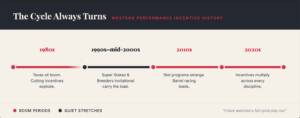
The early 80s were a boom in Texas. Oil money flooded the cutting industry, and incentive programs sprouted up everywhere. Then the oil bust came, and most of those incentives went quiet. For years, the Super Stakes and the Breeders Invitational carried the load almost by themselves. Then the barrel world built the slot programs. Then the ropers got their own. Then everyone got their own. And here we are, standing in the middle of the biggest incentive boom this industry has ever seen.
I have watched stallion programs open their doors with big plans, raise huge books on the strength of a new incentive, and then quietly close those doors a few years later when the math caught up with them. I have shaken hands with breeders who went all in on a hot program and watched some of them quietly check out when the payday didn’t arrive. The cycle does not always announce itself. Most of the time it just whispers.
I am not predicting a crash. I am not a doomer. Anyone who has been around long enough to see a real boom and a real bust knows the warning signs, and I do not see them.
What I do see is the same pattern that shows up in every cycle. The top end goes vertical. The middle starts to stretch. The bottom starts to ask if it can still afford to play. And somewhere in there, the cycle turns. Not into a crash, but into a correction. The shape of the market changes. The programs that were built well survive. The ones that were not, quietly disappear.
I have been in this long enough to know the only thing more dangerous than missing a cycle is forgetting that one is coming.
The Buy-In Problem
Here is a math problem worth thinking about.
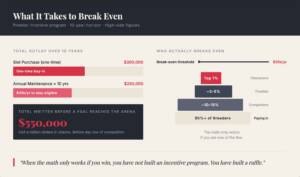
Imagine an incentive program where the entry fee is high, the annual maintenance is high, and the only real money comes out the back end if you make a futurity final. Maybe one in fifty stallions cashes a check worth the price of admission. Maybe one in a hundred. The other forty-nine pay in and pay in and pay in, year after year, hoping that one foal, one rider, one good draw, one good day puts them in the money.
Pencil it out. On the high side, premier incentives: say a slot costs $300,000 to buy in. Say it takes up to $25,000 a year to keep the slot active. Hold it for ten years and you have written more than half a million dollars in checks before a foal of yours has ever reached a futurity arena. To break even on that math, you would need to average $55,000 a year in payouts, every year, for a decade. That means making finals, or close to it, with a horse you bred and raised yourself, year after year after year.
Now look at who actually makes those finals. A handful out of hundreds. The math only works if you are one of the few. For everyone else, the program is paid for by their hope.
There is a name for that kind of structure.
When an incentive’s biggest payout only arrives if you win a futurity final, that is not breeding economics. That is a tournament buy-in. Slot economics are gambler economics, and there is nothing wrong with gambling if gambling is what you came to do. Plenty of people in this industry can afford to gamble, and more power to them.
But most of us did not get into this to gamble. We got into it because we love good horses, because we believe in raising them right, and because we needed a way for the math to pencil so we could keep doing it.
When the math only works if you win, you have not built an incentive program. You have built a raffle.
Built For Who?
The most important question to ask of any incentive program is one almost nobody asks.
Who is this built for?
Some programs are built for the top end of the industry, because that is where the marketing photos come from. Some are built for the stallion station that runs them, because that is where the cut lives. Some are built for the program itself, designed to grow as big as possible regardless of whether the average breeder ever sees a dime.
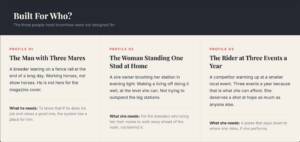
Almost none are built for the man with three mares. He does not need to win a futurity final. He needs to know that if he does his job and raises a good one, the system has a place for him.
Or the woman standing one stud at home, trying to make a living off doing it to the level she can. She does not need to outspend the big stations. She needs the breeders who bring her their mares to walk away ahead of the math, not behind it.
Or the rider who shows up to three events a year because that is what she can afford, and who deserves a shot at hope as much as the rider with seventeen. She does not need a lottery ticket. She needs a purse that pays down to where she rides, if she performs.
That is the gap. That is where the bottom of this industry quietly hollows out.
Most incentives are designed for the breeder who does not need them.
What An Incentive Built For The Rest Of Us Looks Like
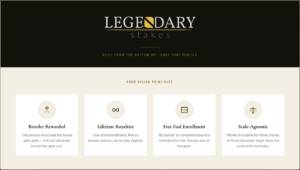
If you wanted to design an incentive program for everyone – from the top of the mountain and also the blue-collar breeder, the blue-collar sire owner, the kind of people who pay attention to every dollar because they have to, the design principles would look different from what we see today.
It would pay the breeder who bred the horse, not just the buyer who lucked into the right colt. No breeder, no industry.
It would be a one-time enrollment for a sire owner, with lifetime royalties. Not an annual ransom that forces you to keep paying just to stay eligible.
It would be free for eligible foals to enroll. No barrier to compete other than what is normal in an entry fee to compete for a shot at a check.
It would work the same way for the three-mare bred stallion owner and the three-hundred-mare bred stallion owner. Scale-agnostic by design, because hope does not scale with herd or book size.
That is the design we have been building toward with Legendary Stakes.
It will happen. There will be $100,000,000 One Hundred Million a year payouts from it.
We are not where we want to be yet. No new system is, at the beginning. But we are scaling, year over year. Legendary Stakes was built from the bottom up to do what most modern incentive programs were not designed to do, which is to make hope pencil for the people who need it to and also, reward excellence in competition.
I am not running down incentives. I built one.
I am asking a different question. I am asking who they are for.
The Cycle Will Turn
The Yellowstone Effect is going to keep bringing new people into this industry. AI and robotics are going to keep pushing humans toward the things only humans can do, and there are few things more authentically human than putting your hands on a horse and trusting time to reveal what you raised. This way of life is not in danger. It is in demand.
But growth alone does not save an industry. Good math does.
The top of the market will always take care of itself. The middle is where the lights stay on. And the bottom is where the next generation of horsemen learns whether this business has a place for them.
None of us are here just for ourselves. The horsemen who built this business before us did not build it for themselves. They lived on pure passion and drive, and they built something we have stepped into. We owe the people coming behind us the same.
Hope is the engine of this business. Faith is the fuel. Stewardship is what keeps the engine running long enough to pass it on.
The cycle is going to turn. It always does.
The only question is what kind of breeders are still standing when it comes back around, and whether the ones we love most still have hope that pencils.

About the Author
Shane Plummer
The team at SDP Buffalo Ranch has spent decades developing one of the most elite American Buffalo genetics programs in the country. We specialize in stallion selection, breeding program consultation, and helping ranchers raise performance-proven buffalo.
Ready to talk genetics, breeding programs, or stallion selection?
Book a Consultation
