


Breeding season has a way of forcing reflection. Every year, decisions are made quietly and deliberately, long before anyone sees a foal, a scorecard, or a payout. Those decisions carry consequences that won’t be fully revealed for years.
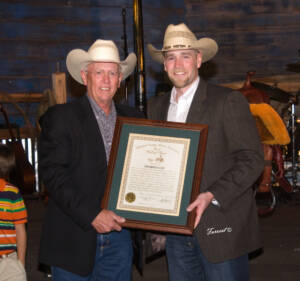
 This year, that reflection has been deeper for me than usual. I was recently inducted as a Master Breeder by the National Modena Club, an honor I am grateful for and proud of. Not because of a single bird or a single crop, but because it represents long-term consistency, repetition, and accountability to outcomes rather than opinions. In a club with a nearly 90-year history, fewer than 40 Master Breeders have been recognized. That perspective matters to me, and I’m genuinely thankful for it.
I don’t want to bore anyone with pigeons. But that recognition forced me to look honestly at how I learned what I know about mating selection, and why some lessons only come through time, mistakes, and discipline.
Oddly enough, I have learned more about breeding from pigeons than I ever could from horses alone.
Why Pigeons Taught Me What Horses Never Could
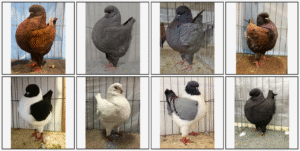
(My 8 National Modena Club Champion Certificate winning birds to date)
Charles Darwin spent thirteen years studying pigeons before writing On the Origin of Species. Not because pigeons were simple, but because they compressed time, cost, and consequence. They allowed patterns to emerge faster.
Pigeons allow me to experiment in ways that are impossible with horses. Gestation is measured in days instead of months. I can produce meaningful numbers in a single season. I can test ideas, fail, adjust, and try again without betting the ranch—literally. That accelerated feedback loop is a massive competitive advantage.
Horses don’t afford that luxury. An eleven-month gestation. Years of development. Tens of thousands of dollars before a horse ever crosses the timeline. Every breeding decision carries weight.
That reality demands discipline. Emotion is expensive in the horse business. Impatience is even more so.
Breeding Is a Game of Probabilities, Not Promises
One of the hardest truths in animal breeding is that success does not equal certainty. A big win does not automatically prove genetic dominance. A large earnings number does not guarantee repeatability.
Full siblings can be wildly different animals. That is not theory. It is biology.
Mating selection is not about guarantees. It is about stacking probabilities in your favor. Those probabilities only reveal themselves through repetition, data, and time.
This is where many people get into trouble. Results are loud. Biology is quiet.
Marketing Is Loud. Biology Is Quiet.
We live in a world driven by attention. Incentives, earnings lists, headlines, and social media amplify what is visible. None of that is inherently bad. Incentives attract participation and help differentiate programs in a crowded marketplace.
But incentives also create noise.
Here at SDP, Alexis Stephas works with mare owners and breeders every day through stallion selection and customer service. She said something recently on a social media group page that stuck with me:
“Incentive culture has become a damned if you do, damned if you don’t kind of thing. I love getting an extra payout as much as anyone else, but I’d have a lot less ulcers if I never had to think about incentives in the horse industry ever again.”
That comment resonates because it is honest. Incentives are not evil. But they are stressful when misunderstood, and dangerous when mistaken for biology—especially when they become the deciding factor in mating selection.
I have watched the same pattern repeat itself more than once. A stallion posts an eye-catching earnings number early, often concentrated at a single major event. Attention floods in. Mare books fill quickly. Expectations inflate. Then time does what it always does. Aged events arrive. Variability shows up. The market recalibrates.
That is not a criticism of any horse. It is simply how biology and probability assert themselves over time.
The Four-Year Gap Nobody Likes to Talk About
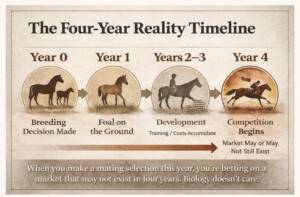
When you make a mating decision today, you are betting on a market that may not exist four years from now. That is the uncomfortable reality of breeding horses.
Four years is a long time. Conception. Gestation. Development. Training. Competition.
Marketing cycles move fast. Incentive programs come and go. Social media trends change monthly.
Biology does not care.
Market signals lag biology, and they always will. I have watched entire incentive ecosystems rise and disappear inside a single foal crop.
When breeding decisions are driven primarily by what is hot right now, long-term biological bets are being placed based on short-term economic noise.
Sometimes that works. Often it does not.
Money is a valuable commodity. There is a fine line between investing and burning it.
It Takes Two to Tango
Mating selection is not about chasing stallions or avoiding them. It is about understanding the mare standing in front of you.
Her genotype. Her phenotype. Her production record, if she has one.

If you have a proven broodmare and a proven cross, follow God’s lead. No one is smarter than God.
If you do not have a proven broodmare, your responsibility is not to gamble. Your responsibility is to study. Study what has worked on her family. Study her physical strengths and weaknesses. Then evaluate stallions through that lens.
Too often, people invert this process. They start with the stallion they want and work backward to justify the mare. That rarely ends well.
It takes two to tango. It always has.
First Principles Still Matter
Over the years, I have consistently returned to three pillars of mating selection: genotype, phenotype, and market. Remove any one of them, and the stool falls over.
Genotype tells us what lies beneath the surface. Phenotype tells us what the individual actually is. The market determines whether the result has value beyond the breeding shed.
These pillars are not emotional. They are practical.
If you cannot afford a mating, do not make it. If you over- or under-breed your mare to a stud, you will suffer the economic fallout—I guarantee it. If you are breeding purely on hope, stop. Hope is not a strategy.
Where Incentives Belong—and Where They Don’t
Incentives are a necessary evil in a highly competitive and congested marketplace. We understand that reality. At SDP, we participate in incentives and have built programs designed to support breeders globally and reward long-term thinking.
But incentives should never be the deciding factor in mating selection. The horse must come first. Always.
History has proven that not all incentive programs survive long enough to see a foal reach competition age. Biology outlasts marketing every time.
Big Game Hunting Requires a Rifle
 Breeding horses is not a shotgun sport. Spraying and praying is expensive. Impatience compounds mistakes.
Mating selection requires precision. Discipline. Patience.
You are hunting big game. Bring a rifle.
Final Thoughts
 Breeding horses for a living forces humility. It forces long-term thinking in a short-term world.
My hope with this blog is not to tell anyone what to do, but to help people slow down and think. We want breeders to win—not just this season, but four years from now when the real test arrives.
I have written more detailed blogs on mating selection in the past. If this topic interests you, you can take a deeper dive by exploring the history on our site.
If we keep biology at the center and treat marketing for what it is—noise—we give ourselves the best chance to do just that.

About the Author
Shane Plummer
The team at SDP Buffalo Ranch has spent decades developing one of the most elite American Buffalo genetics programs in the country. We specialize in stallion selection, breeding program consultation, and helping ranchers raise performance-proven buffalo.
Ready to talk genetics, breeding programs, or stallion selection?
Book a Consultation
